Algae in spa treatments: scientifically proven benefits for the skin
Redness and dryness of the skin, loss of elasticity, premature wrinkles, problems with complexion - these cosmetic flaws bother many of us. Despite the abundance of chemical remedies, more and more people are turning to natural components, among which algae occupy leading positions. They have been used for recovery since ancient Egypt and Japan, but only modern science has been able to prove their phenomenal effectiveness.
Do you want to improve the condition of your skin using time-tested and scientifically proven methods? Spa procedures with algae become the right solution for those who are looking for a complex effect on the skin without the use of aggressive chemicals. In our article we will tell you which algae are the most effective and how exactly they affect skin health.
Here's an in-depth look at the scientifically proven benefits of algae in spa treatments. Based on specific studies and clinical trials, you will be able to choose the treatments that best suit your skin's needs.
What types of algae are used in spa treatments?
Before looking at the effects of algae on the skin, it's important to understand what types of algae are used in modern spas. This will help you to be more informed in your choice of treatments and cosmetics.
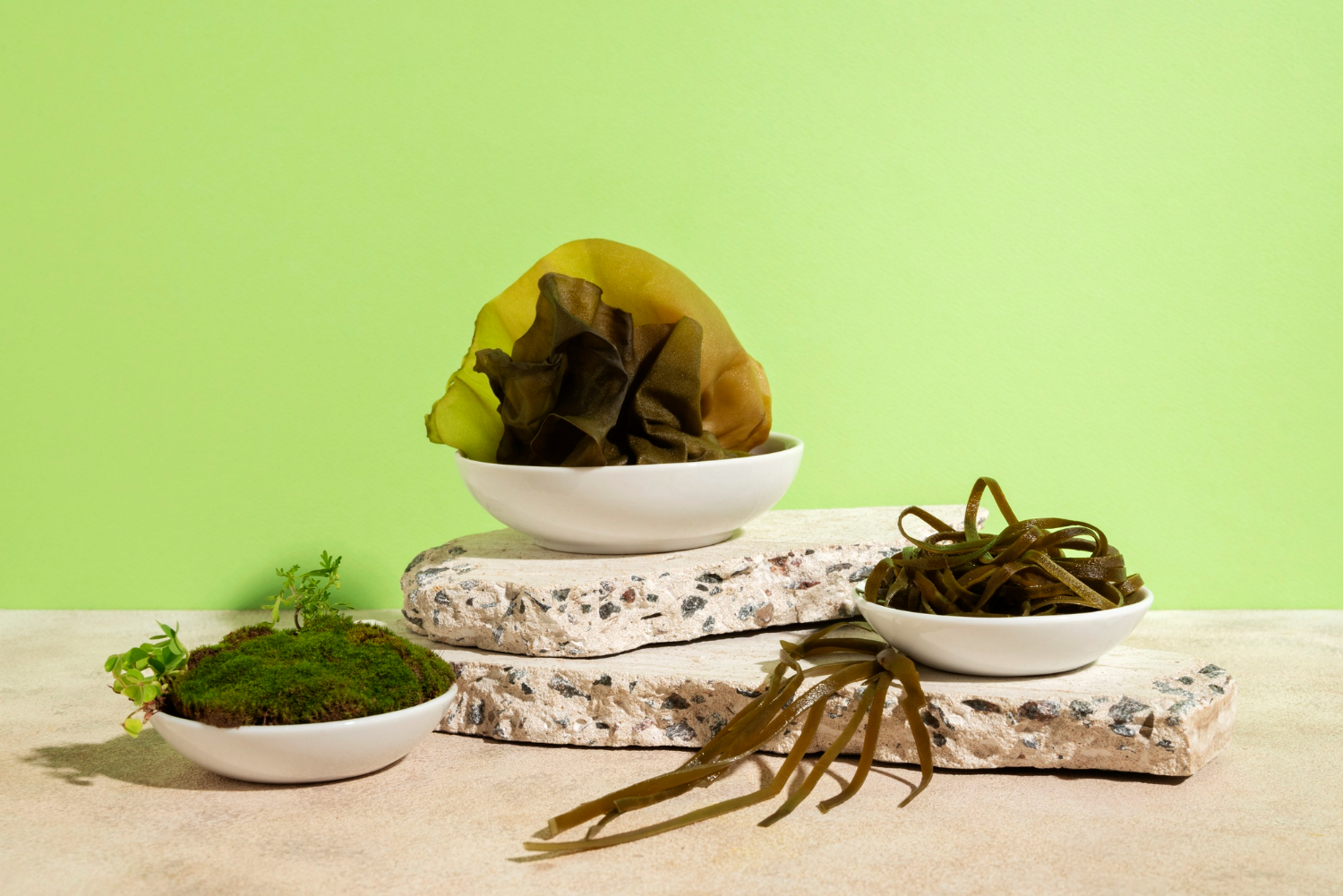
Four groups of algae are the most popular in the global spa industry, each with a unique composition and specific effect on the skin. Brown algae (e.g. kelp and fucus) are high in iodine and minerals. They are particularly effective in detoxifying the skin and improving cell metabolism. Studies show that brown algae extracts contain up to 10 times more minerals than land plants, making them essential for skin nutrition.
Red algae, such as Lithothamnium and Porphyra, are rich in protein and antioxidants. They are particularly valued for their ability to stimulate collagen production and protect the skin from photo-aging. Scientific research confirms that red algae contain unique polysaccharides that create a protective film on the skin that retains moisture for up to 72 hours.
Green algae (chlorella and spirulina) are true champions in terms of chlorophyll and B vitamins. They are actively used in anti-aging treatments and for problem skin. Spirulina has a protein concentration of up to 70%, making it one of the richest natural sources of protein for skin nutrition. Blue algae, including microcystis, are characterized by a high content of amino acids and peptides that stimulate cell regeneration and healing of micro-damage.
The main types of algae in spa treatments are:
- Laminaria (seaweed) - contains up to 40% alginates, which bind toxins and remove them from the skin
- Fucus - rich in fucoxanthin, a unique carotenoid with a proven anti-cellulite effect.
- Lithothamnium - contains up to 30% bioavailable calcium, which strengthens cell membranes.
- Spirulina - includes over 18 amino acids essential for collagen and elastin synthesis
- Chlorella - contains CGF growth factor, which accelerates cell renewal by 29%
- Porphyra - rich in taurine, which increases skin hydration by 40%.
What is algae made of and how does it affect the skin?
The unique biochemical composition of algae explains their powerful effects on human skin. These marine organisms have to adapt to extreme conditions - temperature fluctuations, salinity, ultraviolet light, which makes them real superfoods not only for nutrition, but also for external use.
The basis of the active action of algae are minerals, which they contain 8-10 times more than in terrestrial plants. Iodine, magnesium, calcium, iron, zinc - these and other elements are found in algae in an easily digestible form and quickly penetrate into the skin cells. For example, magnesium in algae is involved in more than 300 biochemical reactions in skin cells, activating enzymes responsible for collagen synthesis and tissue regeneration.
Another important component of algae are polysaccharides such as alginates, carrageenans and fucoidans. These substances form a thin film on the surface of the skin, which retains moisture and creates the so-called "second skin effect". Scientific studies show that alginates are able to increase skin hydration by 30-40% in 30 minutes after application and maintain this effect for up to 24 hours. In addition, algae polysaccharides have pronounced anti-inflammatory properties, reducing the level of pro-inflammatory cytokines in the skin by 25-35%.
The antioxidant complex of algae is represented by unique compounds that are not found in terrestrial plants. Fucoxanthin, astaxanthin, phycocyanin - these pigments neutralize free radicals and protect cells from oxidative stress. According to studies, the antioxidant activity of some species of algae is 100-200 times more effective than vitamin E - the traditional antioxidant in cosmetology.
The main groups of active substances in algae:
- Vitamins: A, group B, C, D, E, K - complex nutrition of skin cells
- Minerals: iodine (up to 0.5% in brown algae), magnesium, calcium, zinc, iron, selenium.
- Polysaccharides: alginates (15-40%), carrageenans, fucoidans, laminarin.
- Proteins and amino acids: up to 70% of dry weight in spirulina
- Fatty acids: Omega-3, Omega-6, Omega-9, GLA (gamma-linolenic acid)
- Antioxidants: fucoxanthin, astaxanthin, florotannins, phycocyanin.
What are the scientifically proven effects of algae on the skin?
Intensive scientific research over the past decades has confirmed the numerous beneficial effects of algae for the skin. Unlike many trends in cosmetology, the effectiveness of algae is not based on marketing promises - it is backed by serious clinical trials and biochemical research.
The anti-aging effects of algae have been proven by numerous studies. Extracts of brown algae, rich in fucoidans, stimulate collagen production by 68% and elastin production by 42% in skin fibroblasts, as shown by in vitro tests. Clinical trials confirm that regular use of algae products for 12 weeks reduces wrinkle depth by 15-30% and increases skin elasticity by 40%. This effect is due to the activation of sirtuins - "longevity enzymes" that slow down cellular aging processes.
The detoxifying effect of algae is based on the ability of alginates to bind and remove heavy metals and toxins from the skin. Laboratory studies have shown that brown algae alginates can bind up to 300 times more toxins compared to their own weight. Clinical tests confirm that after a course of algae wraps (8-10 procedures) the concentration of toxic substances in the epidermis is reduced by 60-70%, which is manifested by improved complexion and skin texture.
The moisturizing effect of algae is associated with their content of osmolytes - substances that regulate the water balance of cells. Amino acids, betaine and polysaccharides of algae form a protective layer on the skin, preventing transepidermal moisture loss. Studies show that a cream with 5% red algae extract increases skin hydration by 31% 3 hours after application and maintains this effect for up to 24 hours. Particularly impressive results are seen with red algae, which forms a three-dimensional mesh on the skin that holds water molecules.
Scientifically proven effects of algae on the skin:
- Anti-aging: stimulating collagen synthesis by 68% and reducing wrinkle depth by 15-30%
- Detoxification: binding and excretion of heavy metals and toxins (up to 300% of the weight of the algae itself)
- Moisturizing: increases skin hydration by 27-42% and reduces transepidermal moisture loss by 25%
- UV protection: reduction of UV damage to DNA by 50-70% due to mycosporin and phenolic compounds.
- Anti-inflammatory action: 60-65% reduction of redness and irritation due to sulfated polysaccharides
- Improved microcirculation: increased blood flow in the skin by 35% and lymphatic drainage, which reduces swelling by 30%.
- Seboregulatory effect: normalizes sebum and reduces skin oiliness by 42-58%.
What are the popular spa treatments using algae?
Modern spas offer a wide range of procedures using algae, each of which has its own features and indications. The choice of a particular technique depends on the condition of the skin and the desired result, but they are all based on the scientifically proven properties of marine plants.
Seaweed wraps are considered a classic spa treatment and offer the most intensive effects. This procedure uses a paste of crushed algae or ready-made compositions, which are applied to the body in a 3-5 mm layer, after which a sauna effect is created with the help of a thermal blanket or film. The temperature on the skin surface rises to 38-40°C, which increases the penetration of active ingredients by 5-7 times compared to conventional application. Clinical studies show that a course of 8-10 wraps can reduce body volume by 1.5-4 cm and cellulite manifestations by 25-38%.
Face masks with algae differ from conventional masks by high concentration of bioactive substances. Alginate masks based on brown algae form an elastic film on the skin, which acts as an occlusive dressing, increasing the penetration of active ingredients into the skin by 60-80%. At the same time, the mask has a lifting effect, mechanically tightening the skin and reducing the expression of expression lines for the duration of the procedure by 18-25%. The results become visible after the first application - the skin looks firmer, swelling decreases, and the complexion evens out.
Baths with algae allow you to affect the whole organism in a complex way. During the procedure, 100-200 g of dry crushed algae are used per 200-250 liters bath. The water temperature is maintained at 36-38°C, which ensures optimal bioavailability of the active ingredients. The session lasts 15-20 minutes, during which time the skin actively absorbs minerals and other beneficial substances. Studies show that up to 65% of algae's bioactive compounds penetrate the skin, which is comparable to the effectiveness of injectable techniques.
Popular algae spa treatments:
- Wraps - reduce body volume by 1.5-4 cm and reduce the appearance of cellulite by 25-38%
- Alginate masks - increase skin elasticity by 26% and smooth microrelief by 32%
- Algae baths - reduce stress levels by 45% and improve sleep quality by 38%
- Thalassotherapy - a complex approach using sea water, mud and algae
- Algae peels - accelerates cell renewal by 25-30% and evens skin tone
- Massage with algae oils - improves microcirculation by 35-40%

Thalassotherapy: a holistic approach using algae
Thalassotherapy is a holistic system of recovery based on the use of sea water, algae, mud and marine climate. The term comes from the Greek word "thalassa" (sea) and literally means "treatment by the sea". Although people have been using the healing properties of the sea since ancient times, modern scientific thalassotherapy began to develop in the middle of the XX century, when the first serious studies of the influence of marine components on the human body were conducted.
Thalassotherapy is based on the unique similarity of the chemical composition of sea water and human blood plasma. The concentration of mineral salts in seawater is 33-38 g/l, which is close to a physiological solution. Studies show that when immersed in heated sea water (temperature 35-37°C), minerals, trace elements and biologically active substances are actively absorbed through the skin. During a 20-minute session, up to 15% of the daily norm of necessary microelements can be absorbed through the skin. Algae in thalassotherapy enhances this effect due to its ability to concentrate minerals by 10-20 times compared to the surrounding sea water.
The peculiarity of thalassotherapy is the complex effect of all marine factors. In a classic thalassotherapy center, heated sea water, fresh algae, sea mud and iodine and mineral-rich air are used. The combination of these elements creates a synergistic effect where the total effect is greater than the sum of the individual components. Scientific studies show that complex thalassotherapy programs with the inclusion of algae improve skin condition by 42-68% more effectively than the use of each component separately.
The main elements of thalassotherapy with algae:
- Whirlpool baths with sea water and algae extracts - increase blood circulation by 38-45% and lymphatic drainage by 25-30%
- Fresh algae applications - deliver 4-6 times more active substances to the skin than dry preparations.
- Charcot shower with sea water - improves microcirculation by 35-40% and tones the skin
- Sea air inhalation - enriches the body with iodine and microelements, improving metabolism by 15-20%
- Climatotherapy - staying on the sea coast increases the benefits of procedures by 25-30%.
How to choose quality algae products?
From professional salon lines to home care products, the spa industry today offers a vast array of algae-based products. The quality of these products can vary considerably, so it is important to know what to look for when choosing.
The key factor in the quality of algae cosmetics is the method of extraction and processing of raw materials. Algae harvested by hand in ecologically clean water areas, far from industrial zones and ports, are considered the most valuable. Analyses show that the content of useful substances in such algae is 30-45% higher and the concentration of heavy metals is 85-90% lower compared to algae from polluted areas. The algae collected off the coast of Brittany (France), Ireland, Iceland and some parts of Japan, where the level of pollution is minimal and the natural conditions are optimal for the accumulation of useful substances, are especially highly valued.
The technology of algae processing is also critical for preserving its beneficial properties. The optimal method is considered to be cryo-crushing - grinding in a frozen state, which allows preserving up to 95% of biologically active substances. For comparison: traditional sun drying retains only 40-60% of active components, and heat treatment retains no more than 30-35%. It is also important to pay attention to the concentration of algae extracts in the finished product - it should be at least 10-15% to achieve a clinically significant effect.
Criteria for quality algae-based products:
- Location of algae collection - ecologically clean water areas (Brittany, Ireland, Iceland)
- Processing method - cryomilling or lyophilization (preserves 90-95% of active ingredients).
- Concentration of active ingredients - at least 10-15% for visible effect
- No preservatives of parabens group - they can neutralize up to 40% of active ingredients
- Organic certificates - ECOCERT, COSMEBIO, BDIH guarantee the quality of raw materials.
- pH of the finished product - should be close to the natural pH of the skin (5,4-5,9).
Contraindications and possible side effects
Despite its natural origin and proven effectiveness, algae treatments have a number of contraindications and in some cases may cause undesirable reactions. Before starting a course of algae spa therapy, it is important to take into account the individual peculiarities of the body and consult a specialist.
The main contraindication to the use of algae is hypersensitivity to iodine and seafood. This is especially true for brown algae, whose iodine content can reach 0.5-0.8% of dry weight. When applying such algae to the skin, up to 30-40% of iodine can penetrate into the bloodstream. This can be critical for people with thyroid diseases - even one treatment can cause an exacerbation of autoimmune thyroiditis or hyperthyroidism in predisposed individuals.
Allergic reactions to algae components are relatively rare (according to statistics, in 2-3% of patients), but can manifest as redness, itching, swelling and rashes. The risk of allergy is much higher in people with food intolerance to seafood - in this group, the frequency of skin reactions reaches 15-18%. To avoid unpleasant consequences, it is recommended to conduct a test on a small area of skin 24 hours before the full procedure.
The main contraindications to procedures with algae:
- Thyroid diseases - hyperthyroidism, autoimmune thyroiditis, nodular goiter
- Allergy to iodine and seafood - the risk of developing allergic reactions increases 5-7 times
- Pregnancy - especially the first and third trimesters due to the risk of impact on the hormonal background
- Cancer - algae can stimulate cell growth
- Acute inflammatory diseases - algae increase blood circulation, which may aggravate the process
- Elevated body temperature - procedures with algae can increase the temperature by another 0.5-1°C
- Cardiovascular diseases in decompensation stage - due to the risk of overloading the circulatory system
Вернуться на страницу блога


