Foot Reflexotherapy: Acupressure Massage
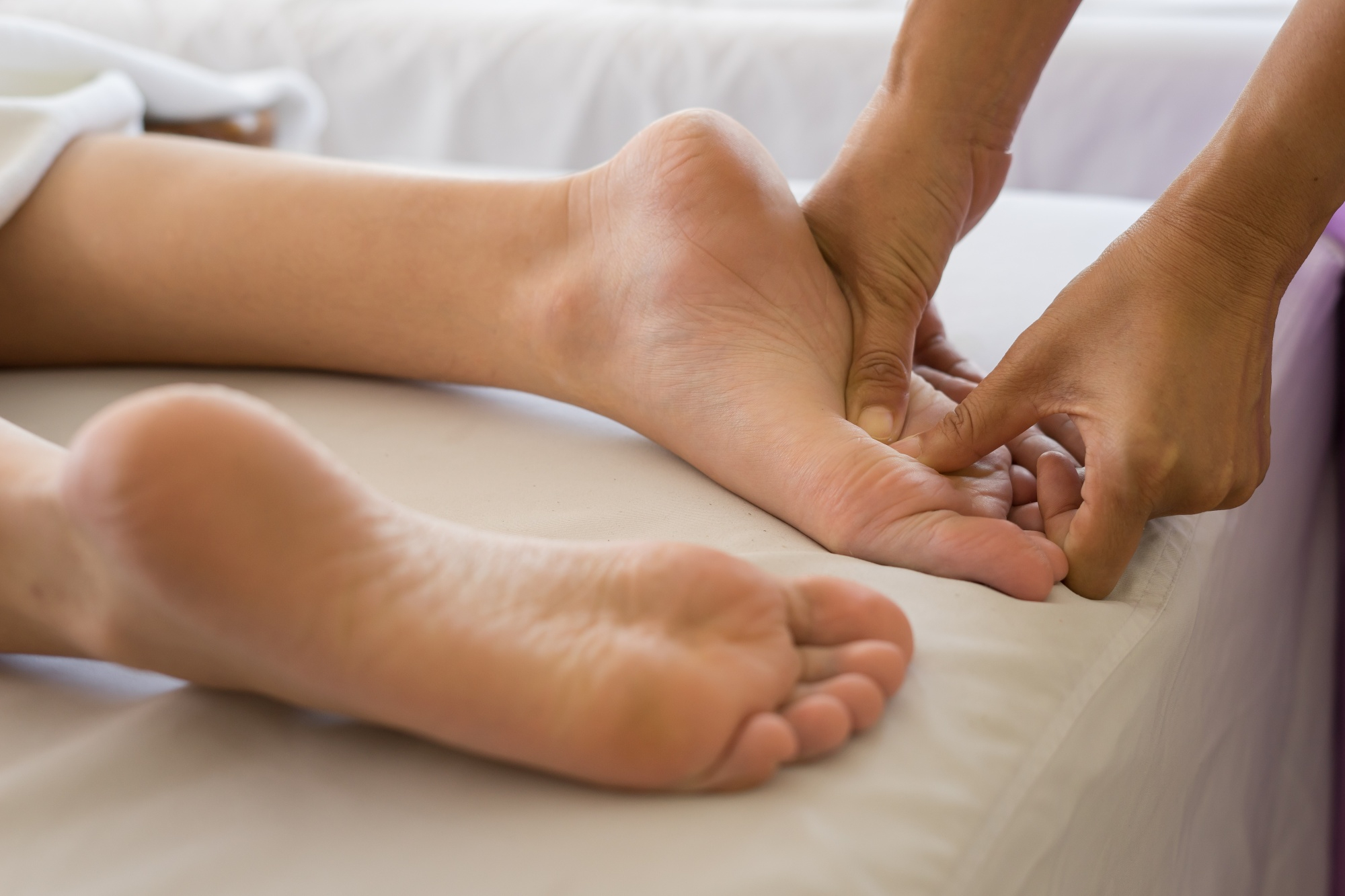
The sole of each foot contains more than 70,000 nerve endings. This is why the feet are called the "map of the body" - every area of the sole is connected to a specific organ or body system. Pressing on a certain point can influence the function of the heart, kidneys, stomach, or spine. This is not a metaphor - it is the principle of reflexotherapy, a practice that is over 5,000 years old.
What Is Foot Reflexotherapy
Foot reflexotherapy is a method of stimulating the reflex zones of the sole in order to normalize the function of internal organs and body systems. In essence, it is an acupressure massage in which a specialist - or the person themselves - targets specific areas of the foot using fingers, knuckles, or specialized tools.
The method has its roots in ancient Chinese and Ayurvedic medicine. Written sources from China date its use to around 2700 BC. In its modern form, foot reflexology was systematized in the early 20th century by American physician William Fitzgerald, who divided the body into 10 vertical zones and described their projections on the foot. Later, his student Eunice Ingham created a detailed foot map that is still used today.
The key difference between reflexotherapy and a regular leg massage lies in the goal of the treatment. A classic massage relieves muscle tension in the leg itself. Reflexotherapy works through the nervous system as an intermediary: stimulating a point on the foot triggers a reflex response in the corresponding internal organ.
How It Works: The Principle of Reflex Zones
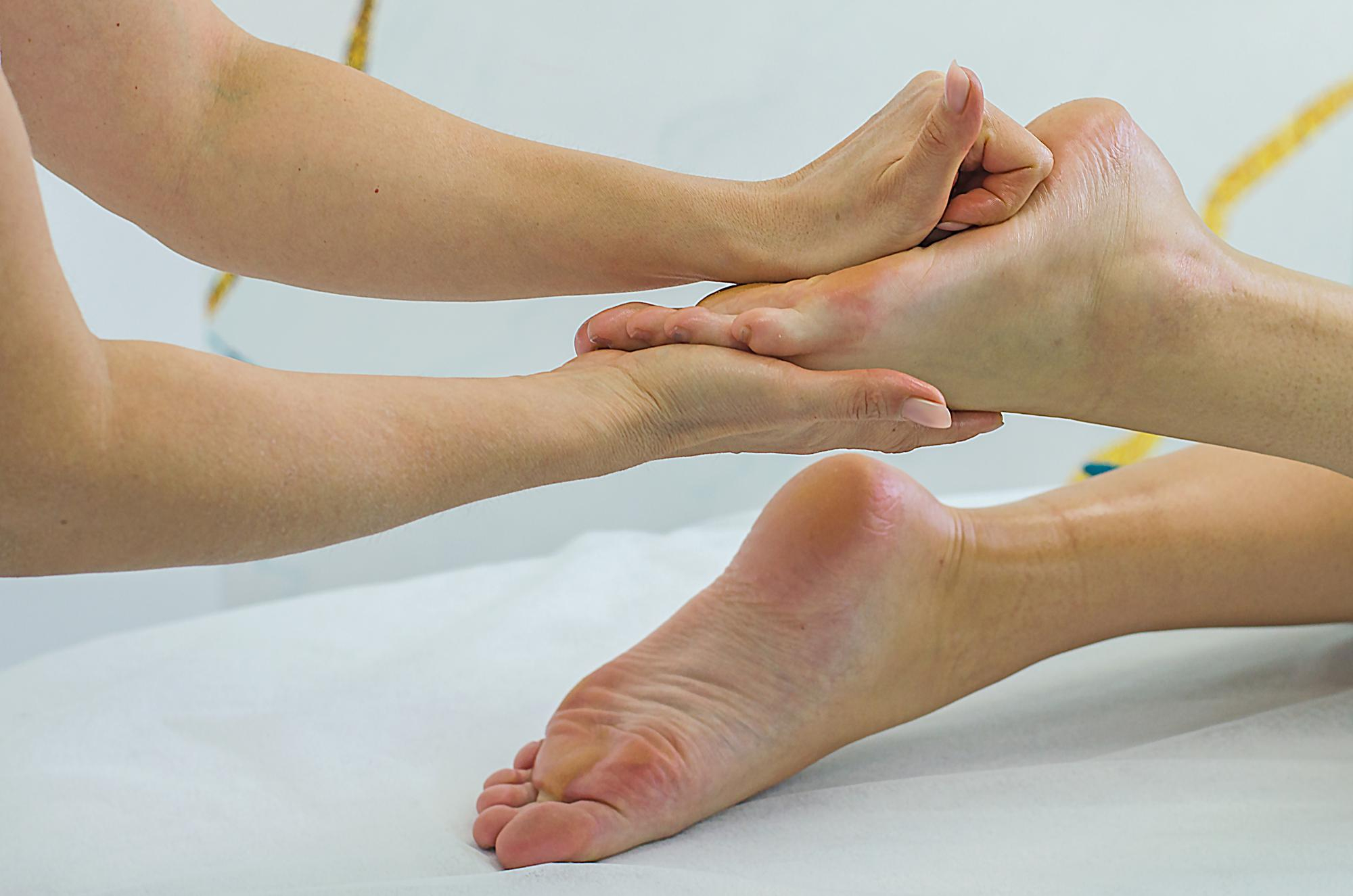
The method is grounded in anatomical reality - the human nervous system forms stable reflex arcs between the body's surface and its internal organs. The foot is one of the most densely connected zones: according to Eastern medicine, all the body's main meridians terminate here, and from a neurological perspective, this is where receptors linked to various parts of the spinal cord and brain are located.
The mechanism works as follows. When pressure is applied to a specific point, the nerve receptors in the sole are activated. The signal travels along nerve fibers to the spinal cord and from there to the corresponding organ. In response, blood supply to that organ improves, spasms are relieved, and cellular metabolism normalizes.
Modern research supports the physiological basis of the method. For example, a study published in Complementary Therapies in Clinical Practice recorded a 30-40% reduction in cortisol levels - the stress hormone - following a series of foot reflexotherapy sessions. Other studies show improvement in peripheral blood flow within just 20-25 minutes of treatment.
The Foot Map: Which Zone Corresponds to Which Organ
The foot is divided into several projection zones. The left foot reflects the left side of the body, the right foot the right side. Some organs - such as the heart and spleen - are represented on only one foot, while paired organs like the kidneys and lungs are reflected on both.
The toes - projection of the head and neck. The big toe corresponds to the head and brain overall. The pads of the remaining toes correspond to the sinuses, eyes, and ears. Tenderness when pressing on the base of the big toe often indicates tension in the cervical spine or a tendency toward frequent headaches.
The ball of the foot (the area beneath the toes, the transverse arch) - projection of the chest cavity. This area contains the reflex points for the heart, lungs, and bronchi. The right lung zone is on the right foot, the left lung on the left foot. The heart point is located exclusively on the left foot, just below the ball beneath the little toe.
The middle of the sole - the most information-dense zone. It includes projections of:
- the stomach and pancreas - the central area, closer to the inner edge
- the liver and gallbladder - right foot, middle of the sole
- the small and large intestine - the lower third of the mid-sole
- the kidneys and adrenal glands - just above the center of the sole
The heel - the zone of the pelvic organs and lower spine. This area contains the reflex points for the bladder, uterus and ovaries (in women), prostate gland (in men), as well as the sacrum and coccyx. Chronic tenderness in the heel when pressed is often associated with issues in the pelvic organs.
The inner arch of the foot (the medial edge, from the heel to the big toe) - projection of the spine. The shape of this edge mirrors the curves of the spinal column: the heel corresponds to the sacrum, the middle section to the lumbar and thoracic spine, and the area at the base of the big toe to the cervical spine.
The outer edge of the foot (the lateral side) - projection of the shoulder girdle, elbows, knees, and hips.
What Health Issues Can Foot Acupressure Help With
Foot reflexotherapy is a complementary rather than primary treatment method. It works well alongside medical therapy or as a standalone preventive practice for functional disorders.
The most pronounced effects are observed in the following conditions:
- Stress and anxiety - regular sessions reduce cortisol production and normalize sleep. A noticeable effect appears after just 3-5 treatments.
- Chronic headaches and migraines - working the toe zones and the cervical projection (inner arch at the base of the big toe) reduces the frequency and intensity of episodes.
- Digestive disorders - stimulating the central sole zone helps with bloating, constipation, and post-meal discomfort.
- Leg swelling and impaired lymphatic flow - foot massage activates peripheral circulation and reduces congestion.
- Hormonal imbalances and PMS - stimulating the heel zone and inner foot edge influences the reproductive system and adrenal glands.
- Chronic fatigue - overall stimulation of the reflex zones tones the nervous system and increases energy levels.
It is important to understand: if pressing on a particular zone causes sharp or unusual pain, this is a signal that the corresponding organ is under increased stress or experiencing dysfunction. In such cases, reflexotherapy can also serve as a diagnostic tool for early problem detection - always in conjunction with a medical consultation.
How to Perform Foot Acupressure: Technique
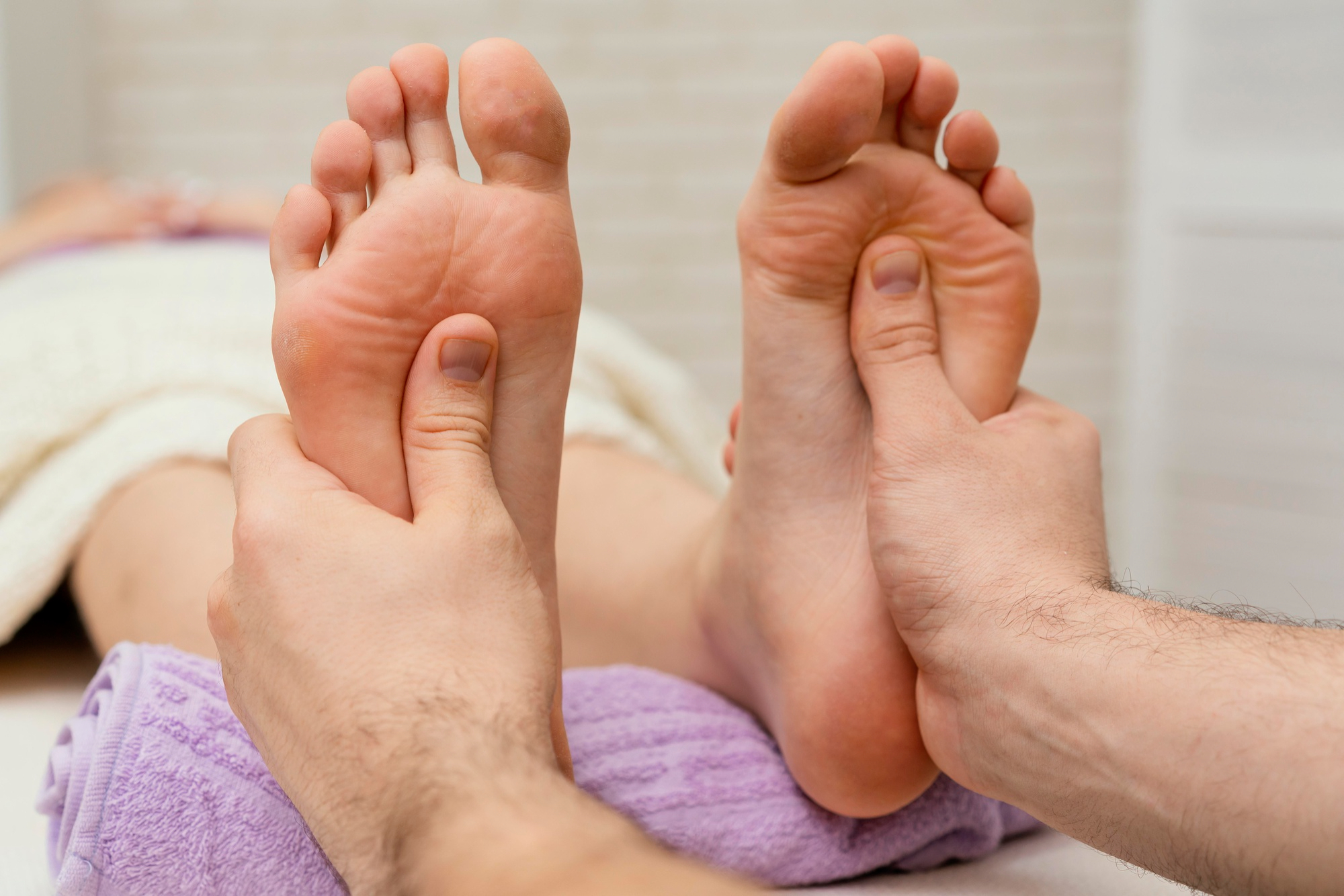
Before a session, the feet need to be warmed up - soaked in warm water (37-38 degrees Celsius) for 5-7 minutes, or given a few minutes of general stroking massage. This relaxes the tissues and increases receptor sensitivity. A small amount of oil or cream is used for smoother movement.
The core techniques of foot reflexotherapy are not about kneading muscles but about targeted, zonal pressure. Three basic methods are used.
The first is thumb pressure. The pad of the thumb applies steady, static pressure to a point for 5-10 seconds, then releases. The pressure is moderate - not painful, but firm enough to feel. This is how specific organ points are worked.
The second is the "caterpillar" technique. The thumb makes small, forward-stepping movements across the zone, bending slightly at the first joint. This is used to work along lines and zones - for example, along the entire inner arch of the foot following the spinal projection.
The third is circular movements. The finger pad makes small circular motions with pressure. This is used on reflex-tense or tender zones to soften them.
A full session takes 30-45 minutes: 5-7 minutes for preparation, 20-30 minutes for zone work, and 5 minutes for finishing strokes. When addressing a specific issue, the corresponding zone receives an additional 3-5 minutes of attention. Tenderness during pressure is a normal response, but sharp, acute pain is a signal to reduce the pressure.
Contraindications: When Foot Reflexotherapy Is Not Recommended
Despite the gentleness of the method, there are conditions in which foot reflexotherapy is contraindicated or requires prior medical consultation.
Absolute contraindications - cases where the procedure must not be performed:
- deep vein thrombosis and thrombophlebitis
- acute inflammatory processes and infectious diseases in the active stage
- skin damage on the feet - wounds, burns, ulcers, active fungal infections
- oncological diseases
- first trimester of pregnancy
Relative contraindications - situations requiring caution and specialist advice: varicose veins, diabetes with impaired foot sensitivity, osteoporosis, decompensated heart failure, and high body temperature. With varicose veins, for example, intense pressure on areas with visible veins is avoided, but general reflexotherapy is still permissible.
It is also worth noting: if strong weakness, dizziness, or worsening pain in any organ occurs after a session, this is a detoxification response. It typically resolves within 24 hours. If symptoms persist, medical consultation is necessary.
How Often to Have Sessions and When to Expect Results
Foot reflexotherapy works cumulatively. A single session brings relaxation and temporary improvement, but a lasting therapeutic effect requires a full course. The standard course is 10-12 sessions at a frequency of 2-3 times per week. The body needs time between sessions to recover and integrate the effects - which is why daily sessions do not produce better results and can sometimes overload the nervous system.
Most people notice the first changes after 3-4 sessions: sleep improves, anxiety decreases, and the intensity of chronic pain diminishes. After a full course of 10-12 sessions, the effect lasts an average of 2-3 months. To maintain results, preventive sessions once every 2-3 weeks are recommended.
For chronic conditions - such as irritable bowel syndrome or chronic headaches - 2-3 full courses may be needed, with breaks of 3-4 weeks between them. This does not mean the method is not working: chronic functional disorders simply require a longer correction period.
Professional Session vs. Self-Massage: What Is the Difference
Self-massage of the feet is an accessible and beneficial practice that can be done at home. It works well for relieving fatigue, general relaxation, stress prevention, and maintaining results between professional sessions. No special equipment is needed - it is enough to know the main zones and basic techniques.
However, self-massage has limitations. First, it is physically difficult to apply the right amount of pressure to your own foot - the hand muscles work in a non-optimal position and tire within 10-15 minutes. Second, without practice it is hard to accurately locate the correct points. Third, it is impossible to fully relax during self-massage - and full body relaxation is itself part of the therapeutic effect.
A professional reflexotherapist, by contrast, works with precise knowledge of zone anatomy, reads the body's responses, and adjusts pressure throughout the session. A specialist is also able to identify problem zones that the person themselves would not notice. For this reason, when dealing with specific health complaints, it is recommended to begin with a professional course and use self-massage as a supportive practice between sessions.
Вернуться на страницу блога


