Body peeling: how to prepare your skin for summer
.jpg)
Gray and flaky skin, uneven texture, lack of healthy glow - these problems are especially noticeable in spring, when we are preparing to change from warm clothes to light summer outfits. A long winter period with a lack of sun, dry indoor air and tight clothing negatively affects the skin, making it dull and lifeless. For many people, the opening of the beach season becomes a real stress because of the unpreparedness of the skin to "go out into the world".
Do you want to meet the summer in full force, with smooth, glowing skin without traces of winter fatigue? Body peeling is the most important stage of preparation for the summer season, which will help to restore a healthy look to your skin and prepare it for tanning. In this article we will tell you how to choose and perform this procedure correctly to maximize the effect.
We offer you recommendations on the use of peeling as part of a complex preparation of the skin for summer. With these tips you will be able to get rid of keratinized cells, eliminate unevenness and dullness, and ensure an even tan without spots and flaking.
What is a body peel and how does it work?
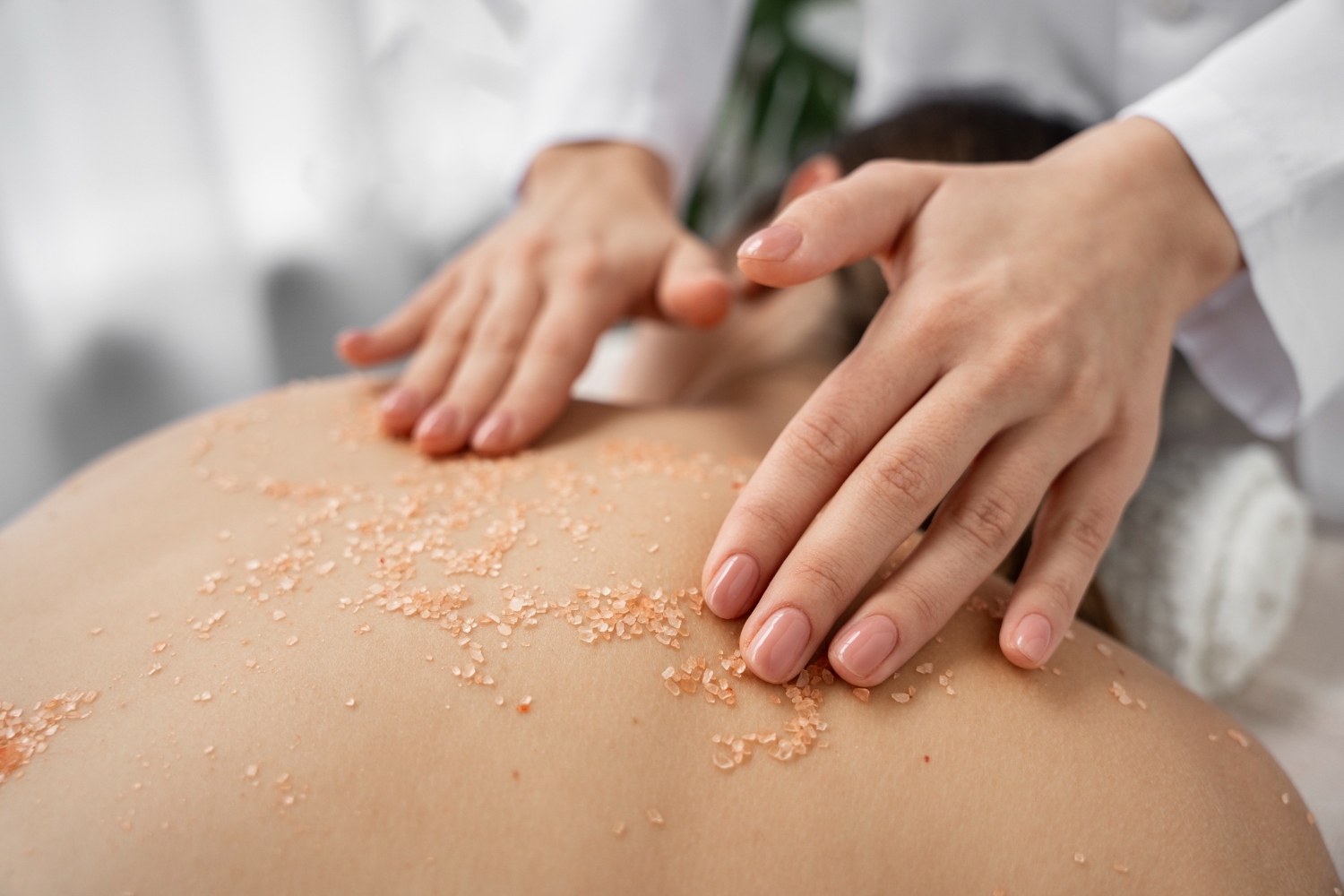
Before you start peeling at home or sign up for a procedure in a salon, it is important to understand what this procedure is and what processes it triggers in the skin. This will help to avoid mistakes and achieve the best result.
Peeling (from the English "to peel" - to exfoliate, cleanse) is a cosmetic procedure aimed at removing the keratinized layer of the epidermis. The upper layer of the skin is constantly renewed: new cells are formed in the basal layer of the epidermis and gradually move to the surface, where they turn into keratinized scales. The complete cycle of epidermis renewal in young people takes about 28 days, but with age this process slows down to 40-60 days. In winter, metabolic processes in the skin also slow down, which leads to the accumulation of keratinized cells on the surface.
The mechanism of action of peeling is based on controlled damage to the skin, which stimulates the processes of regeneration and renewal. In a properly conducted procedure, only dead cells of the stratum corneum are removed without disturbing the integrity of living cells of the epidermis. This triggers a cascade of biochemical reactions: blood circulation increases, fibroblasts (cells producing collagen and elastin) are activated, and epidermis renewal is accelerated. As a result, the skin becomes smoother, improves its texture, evens out its tone and enhances its natural radiance.
Preparing for summer with a peel is of particular importance. Removing the keratinized layer not only improves the appearance of the skin, but also increases the effectiveness of subsequent care - creams and serums penetrate better into the cleansed skin. In addition, peeling contributes to a more even tan and reduces the risk of age spots. According to dermatologists, regular peeling (1-2 times a week) 1-2 months before the beach season can improve skin condition by 60-70%.
The main effects of body peeling:
- Cleansing - removal of keratinized cells and impurities, reduction of pores by 25-30%
- Smoothing - elimination of uneven relief and roughness of the skin by 40-50%
- Stimulation - accelerates cell renewal by 15-20% and activates microcirculation
- Preparation - increasing the effectiveness of subsequent care by 30-40% due to better penetration of active ingredients
- Prevention - reduces the risk of hair ingrowth after epilation by 60-70%
- Improved tanning - a more even and consistent tan that lasts 20-30% longer.
Types of body peels
The modern market of cosmetic services and products offers a wide range of peels for the body, which differ in mechanism of action, intensity and method of application. Understanding the peculiarities of each type will help you choose the best option for your skin and specific tasks.
Mechanical peels are based on the physical removal of keratinized cells using abrasive particles or devices. Scrubs contain solid particles of different origin and size: ground apricot or olive seeds (particle diameter 150-250 microns), sea salt, sugar, coffee grounds, polyethylene or wax microgranules. The larger and sharper the particles, the more intense the effect. For delicate exfoliation, scrubs with small rounded particles of 100-150 microns are used. Mechanical methods also include peeling mitts, dry massage brushes and sponges with an abrasive surface. These peels give immediate results, but act only on the superficial layer of the epidermis.
Chemical peels use acids or enzymes to dissolve the bonds between keratinized cells. AHA acids (glycolic, lactic, malic) with a concentration of 5-15% affect the superficial layer of the epidermis and are ideal for home use. More intensive peels with a concentration of acids 30-70% should be carried out only by professionals. Enzyme peels based on papain, bromelain or fikain dissolve protein bonds between cells, providing a very mild and delicate effect. They are suitable even for sensitive skin and can be used more frequently than other types of peels - up to 2-3 times a week. The effect of chemical peels develops gradually and affects deeper layers of the epidermis compared to mechanical methods.
Hardware techniques provide the most controlled and professional impact. Microdermabrasion is performed using a special device that "bombards" the skin with aluminum oxide microcrystals under pressure and simultaneously vacuum removes exfoliated particles. Hydropiling (hydrodermabrasion) combines mechanical cleansing with a jet of water with the application of active serums under pressure. Ultrasonic peeling uses high-frequency vibrations (25000-30000 Hz) to exfoliate keratinized cells. These methods require specialized equipment and are performed exclusively in beauty salons or clinics.
Comparison of types of body peels:
- Mechanical peels - quick visible result, affordable price (200-800 UAH per product), easy to use at home, the effect lasts 3-5 days
- Chemical peels - deeper impact, home versions cost 400-1500 UAH, salon procedures - 800-2500 UAH, the effect increases gradually and lasts 7-14 days.
- Hardware techniques - professional controlled exposure, the cost of the procedure is 1000-3000 UAH, requires a course of 4-6 sessions, the result can last up to 3-4 weeks.
- Combined methods - combine the advantages of different types of peels, usually performed in salons, cost 1500-4000 UAH, provide a complex result.
Selection of peeling by skin type
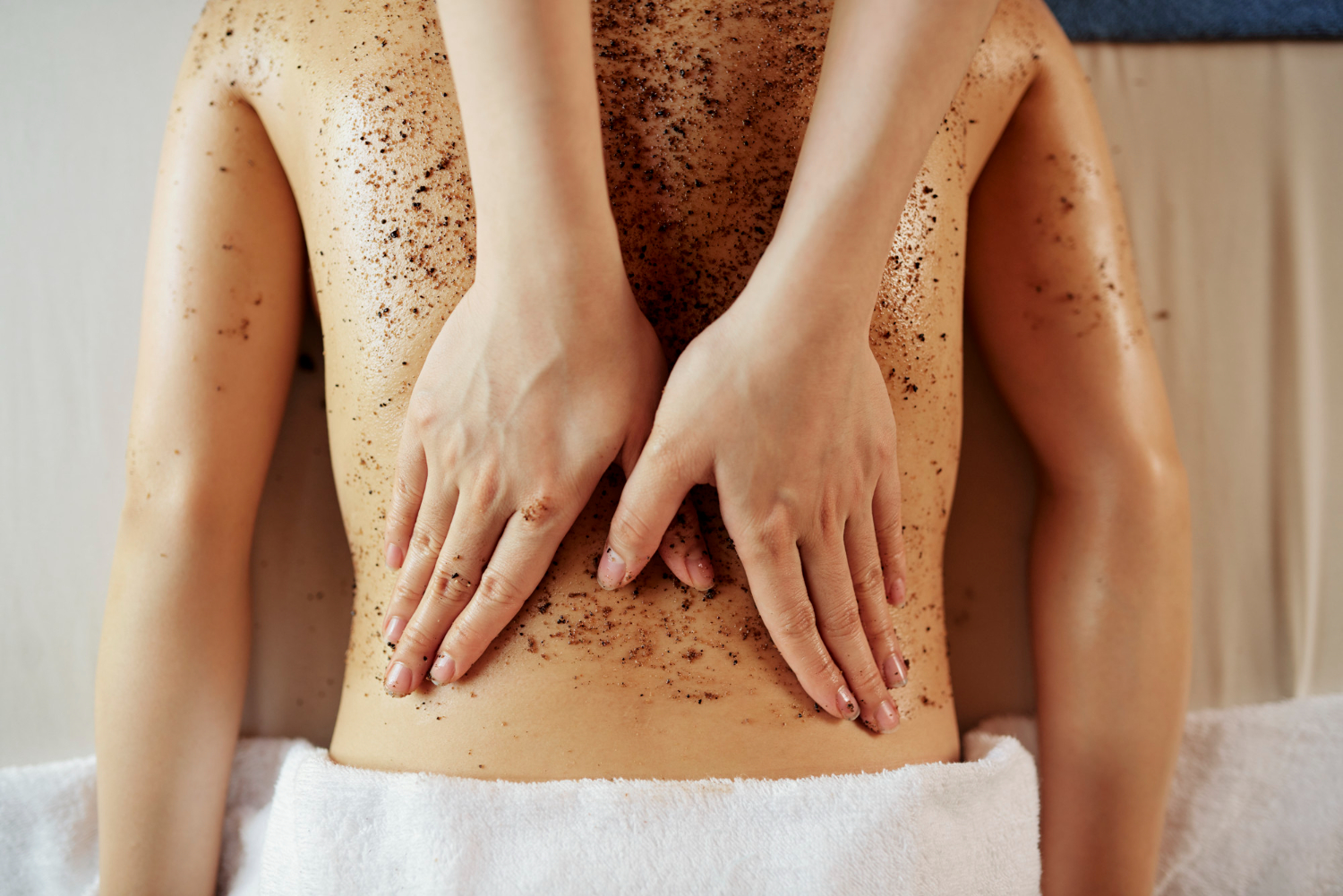
The effectiveness and safety of peeling largely depend on the correct choice of a product or method according to skin type. Inappropriate peeling can cause irritation, dryness or, on the contrary, increase oiliness and provoke rashes.
For dry and sensitive skin, mild exfoliation methods are optimal. Preference should be given to enzymatic peels, which dissolve only dead cells without traumatizing living cells. Among mechanical options, scrubs with small rounded particles and a cream base enriched with moisturizing components (hyaluronic acid, glycerin, oils) are suitable. The ideal concentration of AHA-acids for home use is 5-8%. Frequency of procedures - no more than once every 7-10 days. Good results are shown by products with lactic acid, which in addition to exfoliating action has moisturizing properties and increases the moisture content of the skin by 20-30%.
Normal skin is the most versatile and responds well to different types of peeling. To maintain a healthy state you can use both mechanical scrubs with medium-sized particles and chemical peels with the concentration of AHA-acids 10-12%. The optimal frequency of procedures is 1-2 times a week. Combination treatments that combine physical exfoliation with chemical action are particularly effective. This dual approach enhances the effect by 40-50% compared to using only one method.
Oily and problematic skin requires a more intensive approach. Scrubs with fine abrasive particles and an oil-free gel base are suitable for this type. Effective chemical peels with salicylic acid (BHA), which, unlike AHA-acids, is fat-soluble and penetrates into the sebaceous glands, normalizing their work. The concentration of salicylic acid 1-2% reduces sebum production by 15-25% and reduces the risk of inflammation. For oily body skin, peeling can be performed up to 2-3 times a week. Products with fruit enzymes in combination with antibacterial components (tea tree extract, zinc PCA) have also proven themselves.
Recommendations on the choice of peel:
- For dry skin - enzymatic peels, scrubs with oils, concentration of AHA-acids 5-8%, frequency 1 time in 7-10 days
- For normal skin - universal scrubs, concentration of AHA-acids 10-12%, combined products, frequency 1-2 times a week.
- For oily skin - gel scrubs without oils, salicylic acid 1-2%, more frequent use 2-3 times a week.
- For mature skin - chemical peels with glycolic acid 10-15%, products with retinol, frequency once every 7 days.
- For skin with signs of photo-aging - peels with vitamin C, enzymes in combination with antioxidants, a course of salon procedures.
- For skin with hyperpigmentation - bleaching peels with kojic acid, arbutin, licorice extract, only in the fall-winter period.
Preparation for the peeling procedure
The effectiveness and safety of peeling depends largely on proper preparation. Competent preparatory stage allows not only to strengthen the result of the procedure, but also to reduce the risk of unwanted reactions, especially when it comes to preparing the skin for the summer season.
1-2 weeks before the start of the course of peeling is recommended to adjust the daily skin care. It is important to switch to milder cleansers with a neutral pH (5.5-6.5), refuse aggressive soap bases that raise the skin pH to 8-9 and destroy the hydrolipidic barrier. Studies show that the use of alkaline soap reduces the protective functions of the skin by 30-40%, making it more vulnerable to the irritating effect of peeling. It is also necessary to temporarily exclude from care products with retinoids, high concentrations of vitamin C (more than 10%) and other active ingredients that themselves have exfoliating properties.
Immediately before peeling it is necessary to thoroughly clean the skin and make sure that there are no micro-damage, irritation and inflammation. The optimal time for the procedure - in the evening, when the skin will not be exposed to sunlight. 24-48 hours before peeling, it is recommended to conduct a test on a small area of skin (for example, on the inside of the wrist or behind the ear) to check the individual reaction, especially if you are using the product for the first time. Such a test can detect allergic reactions, which occur in about 3-5% of people when using active cosmetics.
Proper preparation for peeling:
- 7-14 days in advance - eliminate aggressive cleansers, retinoids and high concentrations of acids in your skincare routine
- In 3-5 days - increase skin moisturization using creams with ceramides and hyaluronic acid
- 1-2 days - test for allergic reaction on a small area of the skin
- 12-24 hours before - exclude any physical activity that causes intense sweating
- 30-60 minutes - thoroughly cleanse the skin with a mild pH-neutral product and allow it to dry.
- Immediately before the procedure - make sure that there is no damage, irritation and inflammation.
Proper technique of peeling at home
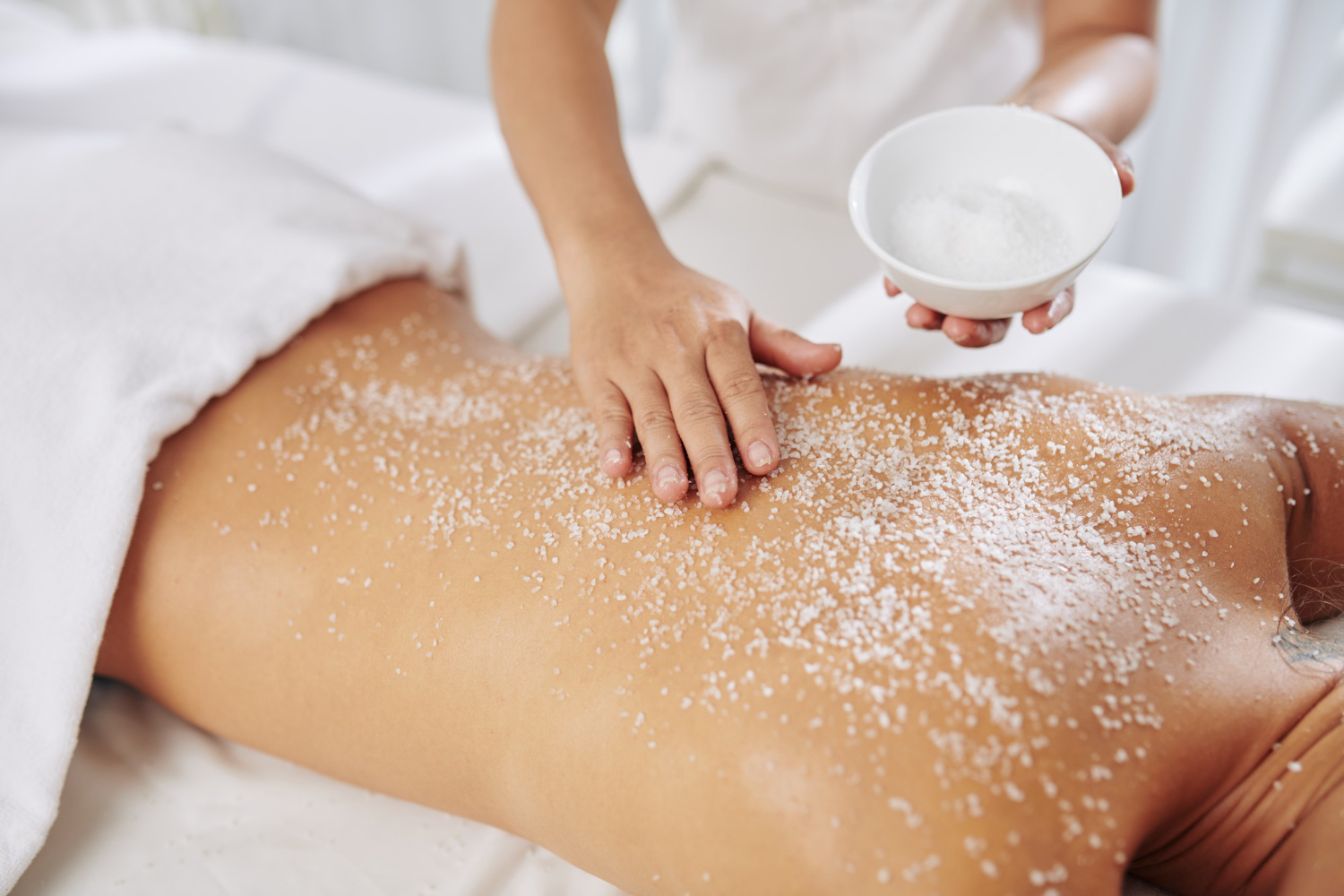
Even the best quality peeling product may not give the expected result or cause irritation if the technique of the procedure is violated. It is especially important to follow the correct technique when preparing the skin for the summer season, when a delicate but effective effect is required.
Mechanical peeling (scrub) should be applied to wet skin with circular movements, moving from bottom to top - from ankles to thighs, from wrists to shoulders. The intensity of the impact should correspond to the sensitivity of the area: for delicate areas (the inside of the arms and thighs) the pressure should be minimal, for rough areas (elbows, knees, feet) you can increase the pressure. The optimal duration of scrub massage is 3-5 minutes for the whole body, of which no more than 30-40 seconds per zone. Longer exposure may cause microtrauma and irritation. Scrubbing particles should roll smoothly over the skin, not scratch it.
Chemical peels require special care. The product is applied to dry skin using a brush or a special applicator, starting with less sensitive areas. It is important to strictly control the exposure time, which is usually 5-10 minutes for home remedies with an acid concentration of 5-15%. If severe burning or discomfort occurs, the peeling should be rinsed off immediately with cool water and a soothing product should be applied. After the procedure, the skin may be slightly reddened for 20-40 minutes, which is a normal reaction and indicates the activation of microcirculation.
It is important to remember that the frequency of treatments depends on the type of peel and individual skin characteristics. Soft scrubs can be used 1-2 times a week, chemical peels - once every 7-10 days, and intensive professional products - no more than once every 14-21 days. Increasing the frequency of procedures does not accelerate the achievement of results, but on the contrary, can disrupt the barrier function of the skin and cause aggravation of problems. Clinical studies show that the optimal course of skin preparation for summer is 6-8 peeling procedures with compliance with the recommended intervals.
Technique of peeling at home:
- For mechanical peeling - circular movements from bottom to top, 3-5 minutes for the whole body, no more than 40 seconds for one zone
- For chemical peeling - even application on dry skin, exposure time 5-10 minutes (strictly according to the instructions)
- For apparatus methods - smooth movements along massage lines, without delay on one area
- For problem areas (elbows, knees, heels) - double treatment with more intensive action
- Particularly sensitive areas (inner surface of thighs, décolleté) - minimal mechanical action
- After peeling - thorough washing off the product with cool water for 1-2 minutes.
Skin care after peeling
After the peeling procedure, the skin becomes more sensitive to external influences, so proper post-peeling care is critical, especially in preparation for the summer season. Restoration and protection of the skin after exfoliation is the most important stage, on which depends both the consolidation of the result and the prevention of possible complications.
Immediately after peeling it is necessary to restore the hydrolipidic barrier of the skin, which is partially broken in the process of exfoliation. For this purpose, products with lipid-repairing components are used: ceramides, cholesterol, fatty acids. The optimal ratio of these components is 3:1:1, which corresponds to the natural composition of the skin lipid barrier. Such products accelerate the restoration of the skin barrier function by 40-50% compared to conventional moisturizing creams. In the first 24-48 hours after the procedure, you should avoid any active ingredients (retinoids, vitamin C, fruit acids), as well as alcohol-containing products that can irritate the renewed skin.
Special attention after peeling should be paid to UV protection, as renewed skin is more susceptible to UV damage. The use of sunscreen with SPF at least 30 (and better 50) is a mandatory stage of care, even if you carry out the procedure in the evening. Studies show that within 7-10 days after peeling, the risk of hyperpigmentation with UV exposure increases by 60-80%. It is desirable that the sunscreen contains physical filters (titanium dioxide, zinc oxide), which are less irritating to the skin than chemical filters.
To enhance regeneration after peeling, it is recommended to use products with panthenol (5-10%), allantoin (0.5-2%), niacinamide (4-5%), peptides. These components accelerate the healing of micro-damage by 30-40% and stimulate collagen production, which makes the result of peeling more noticeable and long-lasting. It is also useful to increase water intake to 30-35 ml per kilogram of weight per day to maintain an optimal level of skin hydration from within. Clinical studies show that adequate water intake improves skin hydration by 15-20% and improves skin elasticity.
Skin care after peeling:
- In the first 24 hours - barrier restoration with products with ceramides, application of soothing products with panthenol (5-10%) and allantoin (0.5-2%)
- Within 2-3 days - intensive moisturizing with hyaluronic acid, glycerin, urea (not more than 5%).
- For 7-10 days - mandatory sun protection with SPF 30-50, avoid direct sunlight from 10 to 16 hours.
- During 10-14 days - exclusion of steaming, saunas, baths, hot baths and intensive physical activity.
- After recovery - gradual introduction of products with antioxidants (vitamin E, resveratrol, astaxanthin) into the care
- In case of redness - application of products with zinc (1-2%), Centella asiatica extract, bisabolol.
Вернуться на страницу блога


