Facial peels at a spa: types, results and aftercare
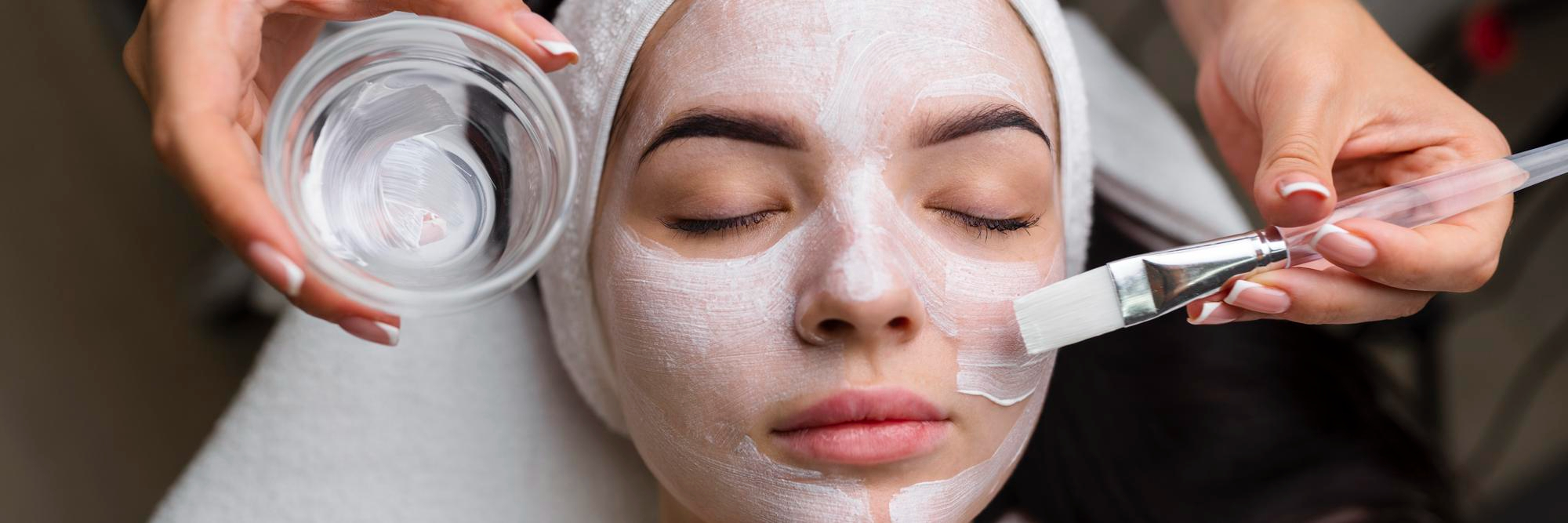
Skin renews itself cyclically: new cells form in the deep layers of the epidermis and gradually rise to the surface, where they die and shed. In youth, this cycle takes about 28 days. After 30, it slows to 35-45 days; after 50 - to 60-90 days. The slower the renewal, the longer dead cells remain on the surface - skin becomes dull, pores clog, wrinkles deepen, and pigmentation spots grow more visible. Peeling artificially accelerates this process: it removes the keratinized layer and triggers active renewal.
How peeling works: the skin renewal mechanism
During a peeling, the intercellular bonds in the stratum corneum of the epidermis are broken - this causes dead cells to separate faster than in normal conditions. At the same time, a controlled micro-damage to the tissues occurs. The body interprets this as a signal for repair: fibroblasts are activated - the cells responsible for synthesizing collagen and elastin. This is precisely why regular peelings not only cleanse the skin, but also improve its density and firmness.
The depth of treatment determines the scale of the response. A superficial peeling affects only the stratum corneum of the epidermis - this is gentle renewal with no recovery period. A medium peeling penetrates to the basal layer of the epidermis and the upper layers of the dermis - here active collagen synthesis takes place, but 5-10 days of recovery are required. A deep peeling affects the middle layers of the dermis, delivers a pronounced rejuvenating effect, but requires rehabilitation of up to 2-3 weeks and is performed only by a specialist.
Types of peelings by treatment method
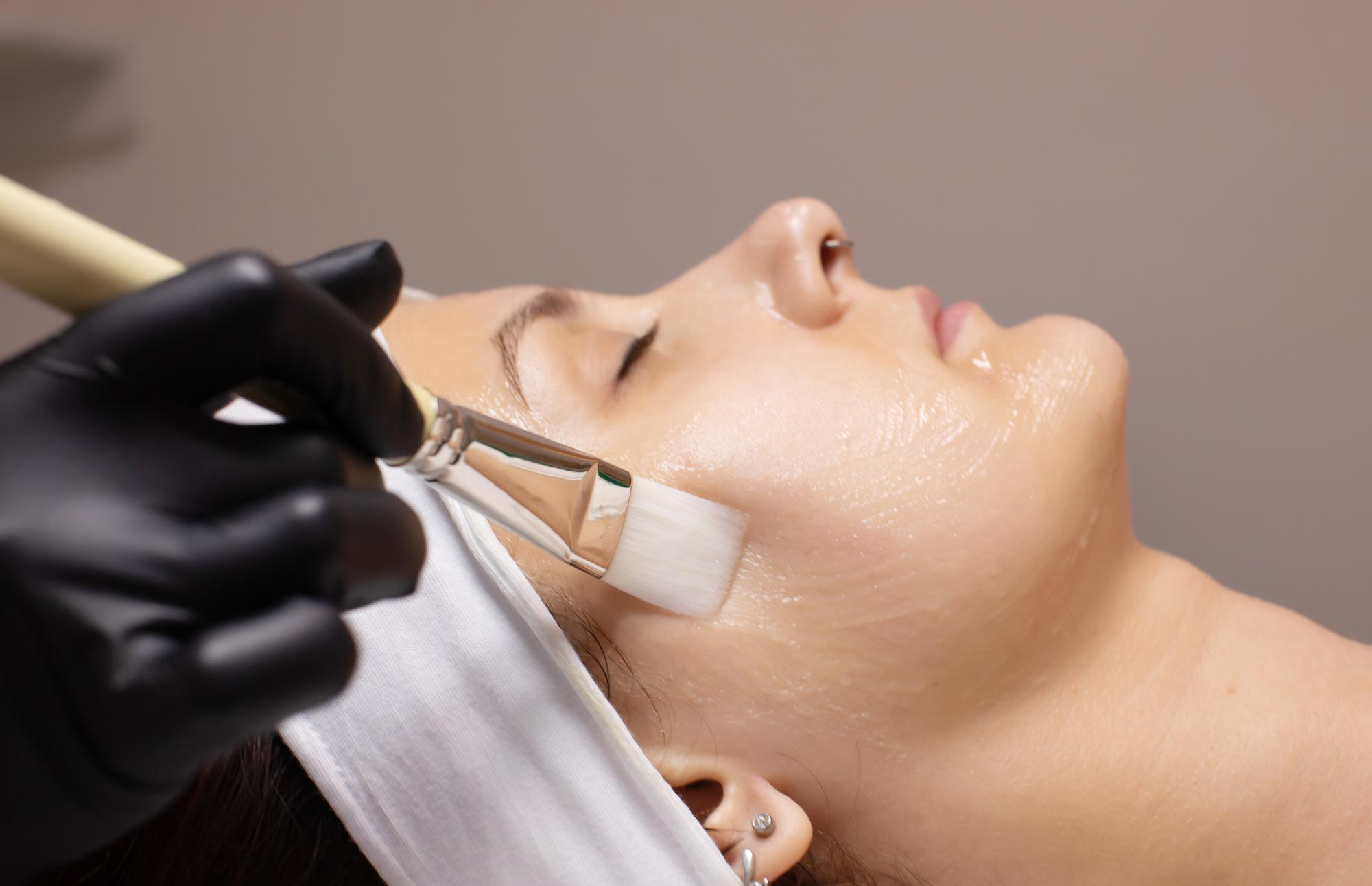
- Mechanical peelings remove keratinized cells physically - with abrasive particles or instruments. A scrub with particles of salt, sugar, or cellulose works on the very surface. Microdermabrasion - an apparatus-based polishing with aluminum oxide crystals or diamond tips - provides deeper and more uniform exfoliation. Dermaplaning - scraping away the keratinized layer and vellus hairs with a special scalpel - creates a perfectly smooth surface. All mechanical methods deliver immediate results, but have virtually no effect on collagen or pigmentation.
- Chemical peelings are the most widely used type in spa salons. Acids dissolve the intercellular cement of the stratum corneum, providing controlled exfoliation. Depending on the type of acid and its concentration, the effect can be superficial, medium, or deep. Chemical peelings work not only on cell renewal, but also on pigmentation, scarring, and wrinkles.
- Enzyme (enzymatic) peelings use plant-derived enzymes - papain from papaya, bromelain from pineapple - which break down the protein bonds in keratinized cells. This is the gentlest type of peeling: no abrasion, no acid action, no burning sensation. Suitable for sensitive and couperose-prone skin. The effect - delicate cleansing and texture refinement without irritation.
- Apparatus peelings work through physical treatment factors. Ultrasonic peeling gently cavitates impurities and keratinized cells without damaging the skin. Laser and fractional peelings create controlled micro-damage in precisely targeted zones, triggering powerful collagenogenesis. These methods deliver the most pronounced anti-aging effect, but require a recovery period of 3 to 14 days depending on the treatment depth.
Chemical peelings in detail: types of acids and their purposes
The choice of acid determines which problem the peeling addresses. Different acids have different molecular sizes - this is precisely what determines the depth of their penetration into the skin.
- Glycolic acid (AHA) - the smallest molecule among fruit acids, penetrates deeper than other AHAs. Concentrations of 20-35% provide a superficial peeling, 35-70% - a medium one. Primary purposes: evening skin tone, reducing fine lines, stimulating collagen production. One of the most versatile options for anti-aging care.
- Mandelic acid (AHA) - a large molecule, penetrates slowly and evenly, less irritating to the skin. Concentrations of 20-40%. Optimal for acne and post-acne: has an antibacterial effect, regulates sebaceous gland activity, lightens post-inflammatory pigmentation. Well-tolerated by darker skin without the risk of post-peeling pigmentation.
- Lactic acid (AHA) - gentle action, additionally moisturizes the skin due to its hygroscopic properties. Concentrations of 10-30%. Ideal for dry, thin, and sensitive skin that needs delicate renewal without over-drying.
- Salicylic acid (BHA) - fat-soluble, the only one among popular peeling acids that penetrates into the sebaceous glands and pores. Concentrations of 10-30%. Dissolves sebum, eliminates blackheads, reduces inflammation. Indispensable for oily skin, enlarged pores, and acne.
- Trichloroacetic acid (TCA) - the basis of medium and deep chemical peelings. Concentrations of 10-15% provide a superficial effect, 20-35% - a medium peeling with 7-10 days of rehabilitation. Works on deep wrinkles, post-acne scars, persistent pigmentation, and photoaging. Performed exclusively by a specialist - independent use of TCA is not acceptable due to the high risk of burns.
Peeling depth: superficial, medium, deep
Peeling depth - the key parameter when choosing a treatment. The deeper the effect, the more pronounced the result, but also the longer the recovery period.
A superficial peeling affects only the stratum corneum of the epidermis. There is no recovery period - the skin may redden slightly for 2-4 hours. Result: fresh complexion, refined texture, clean pores. Visible as early as 1-2 days after the procedure. Can be done once every 2-4 weeks. Suitable for regular maintenance care for any skin type.
A medium peeling penetrates to the basal layer of the epidermis and the upper portions of the dermis. Recovery - 5-10 days: skin reddens, then peels in sheets. Result: noticeable refinement of skin relief, lightening of pigmentation spots, reduction of superficial wrinkles by 30-50%, improvement in skin density. The full effect is visible 2-3 weeks after the new collagen synthesis is complete. Performed no more than once every 3-6 months.
A deep peeling reaches the middle layers of the dermis. Performed only in a medical setting with anesthesia. Recovery - 2-3 weeks. Delivers maximum anti-aging effect: eliminates deep wrinkles, significant scars, and serious pigmentation disorders. Results last 3-5 years. Due to the high intensity of treatment and lengthy rehabilitation, this type is used far less frequently than superficial and medium peelings.
How to choose a peeling for your skin type and concern
There is no universal peeling. The same formula will deliver a good result on oily skin, but cause irritation and flaking on dry skin. The choice is always built on two parameters: skin type and the problem that needs to be addressed.
Oily and problem-prone skin with enlarged pores and acne responds best to salicylic acid (10-20%) and mandelic acid (20-30%). Salicylate penetrates pores and dissolves sebum; mandelic acid works more gently and additionally lightens post-acne marks. During active inflammation, aggressive concentrations are not used - only mild anti-inflammatory protocols.
Dry and sensitive skin requires minimal irritation. The optimal choice is lactic acid (10-20%) or an enzyme peeling. Both options renew the skin without disrupting the lipid barrier. Mechanical scrubs with large abrasive particles are contraindicated for this skin type - they create micro-damage that increases dryness and irritation.
Skin with pigmentation needs regular superficial renewal that gradually draws pigment out of the upper layers of the epidermis. Glycolic and mandelic acids in a course application are the most effective: 6-8 treatments with a 2-3 week interval. For persistent deep pigmentation, medium peelings based on TCA 15-20% are added.
Skin with early signs of aging - fine lines, loss of tone, dull complexion - responds best to glycolic acid and retinoic peelings. They stimulate collagen synthesis, accelerate cellular renewal, and gradually even out skin relief. A course of 4-6 glycolic peelings noticeably improves skin density and reduces superficial wrinkles.
Post-acne - scars, stagnant spots, uneven texture - one of the most challenging concerns. Superficial peelings here deliver limited results. Leveling the skin's relief requires medium peelings (TCA 20-25%, retinoic peeling) or apparatus methods - fractional laser or microdermabrasion. A course-based approach with alternating methods delivers better results than a single intensive treatment.
How a peeling procedure is performed at a spa salon
Before the procedure, the specialist diagnoses the skin: evaluates its type, condition, presence of inflammation, sensitivity, and contraindications. Based on this, the type and concentration of the acid are selected. Skipping this stage is not an option - an incorrectly chosen peeling can produce the opposite effect.
The first step - cleansing. The skin is cleansed with a micellar or gel product, then a pre-peeling lotion is applied to degrease the surface. This is important: residual skin sebum creates a barrier and reduces the evenness of acid penetration.
The second step - application of the formula. The acid formula is applied with a brush or cotton pad in an even layer, starting with the least sensitive zones (forehead, nose) and finishing with the periorbital area. Exposure time - the dwell time on the skin - depends on the concentration and skin reaction: from 2-3 minutes for a superficial peeling to 10-15 minutes for a medium one. During the procedure, tingling and mild burning are possible - this is a normal reaction to the acid.
The third step - neutralization. Once the exposure time has elapsed, the acid is neutralized with a special formula (typically based on sodium bicarbonate) or rinsed off with plenty of water - depending on the type of peeling. Enzyme and some AHA peelings self-neutralize.
The final stage - soothing care. A calming mask with panthenol, aloe vera, or centella is applied to the skin, followed by an SPF cream. The full procedure takes 45-60 minutes. For medium peelings, additional time is added for intensive recovery care - totaling 60-90 minutes.
Peeling results: what to expect and when
Immediately after the procedure, the skin looks red and slightly irritated - this is a normal reaction that resolves within a few hours after a superficial peeling or 1-2 days after a medium one. Expecting a perfect result right away is not warranted: during the first 2-3 days the skin adapts.
After 3-5 days, visible renewal begins: the skin brightens, texture evens out, pores narrow. With a medium peeling, active flaking occurs during this period - this is a normal process of the treated stratum corneum separating. The flaking must not be mechanically removed - this disrupts the renewal process and can lead to post-peeling pigmentation.
After 7-14 days following a medium peeling, and 2-3 days after a superficial one, the main result becomes visible: an even tone, smoother texture, fresh complexion. A 20-40% reduction in the intensity of pigmentation spots after one procedure - a typical result of a glycolic or mandelic peeling at medium concentration.
A lasting and pronounced result is only achieved through a course approach. After 4-6 superficial peelings with a 2-3 week interval, skin is noticeably denser, tone is evened out, fine lines are smoothed. After a course of medium peelings - 2-3 treatments with a 4-6 week interval - the skin's relief changes fundamentally: superficial scars fade, pigmentation lightens considerably, and firmness is restored.
Skincare after peeling
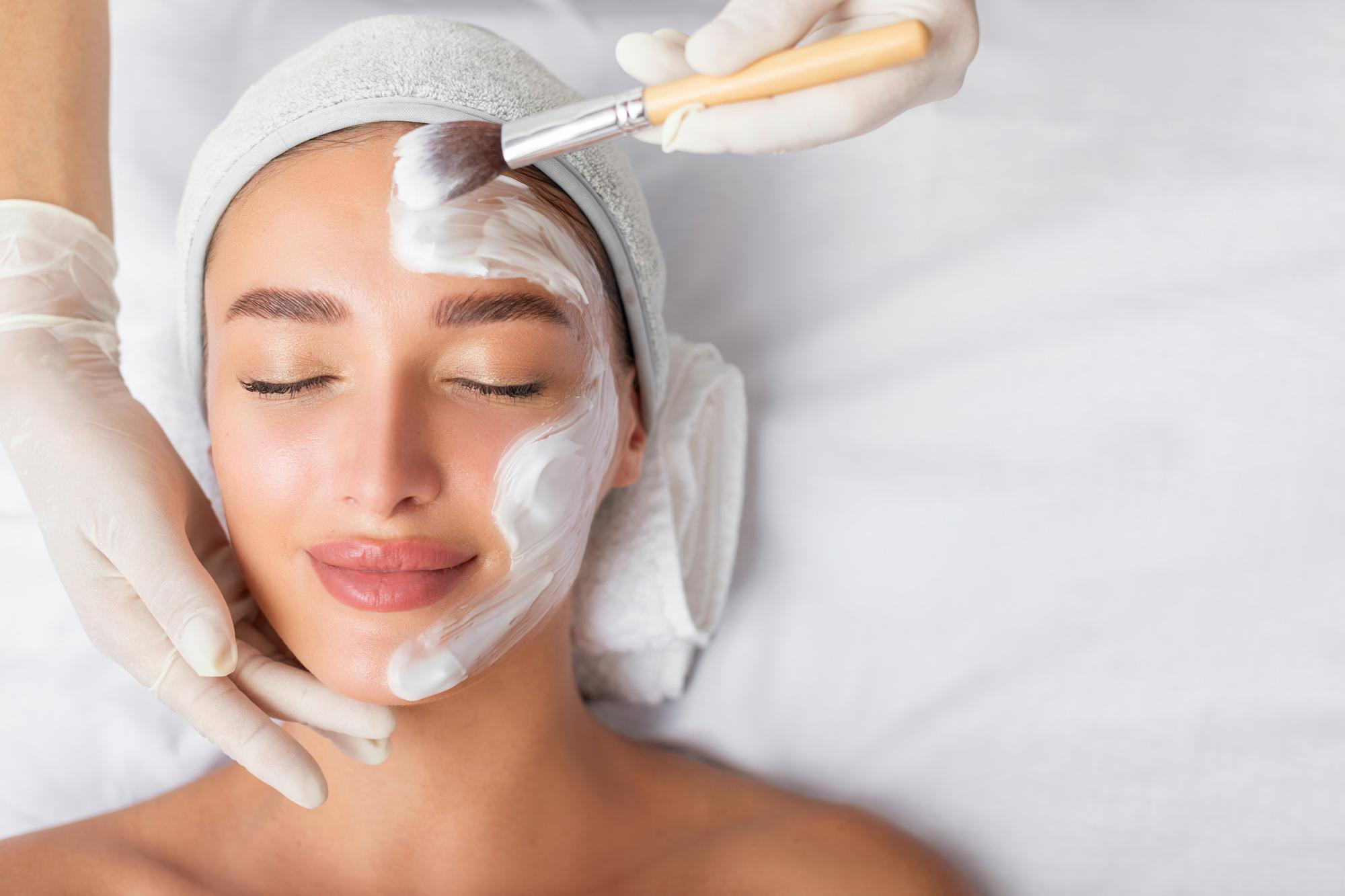
Post-peeling care determines how fully the results of the procedure are realized and whether complications will arise. This is especially critical after medium peelings - violating the post-peeling protocol is the main cause of pigmentation and irritation.
For the first 3-5 days after a superficial peeling and 7-10 days after a medium one, the following restrictions apply:
- no visiting the sauna, steam bath, swimming pool, or taking hot baths - overheating intensifies inflammation
- no use of scrubs and other exfoliating products
- no squeezing or mechanically removing flaking areas
- no use of products with active acids, retinol, or alcohol-containing components
- no sun tanning or tanning beds
What must be done without fail: apply SPF 30-50 every morning for at least 4 weeks after the peeling. Renewed skin is deprived of part of its protective pigment and is 2-3 times more sensitive to ultraviolet radiation. Without SPF, the risk of post-peeling pigmentation is high - especially in spring and summer. The SPF cream is applied as the last step of the morning routine on top of the moisturizer.
Basic care during the recovery period: gentle cleansing without aggressive surfactants, moisturizing serum with hyaluronic acid or panthenol, nourishing cream to restore the barrier. After medium peelings, regenerating products with centella, ceramides, and peptides are additionally prescribed.
Contraindications and common mistakes
Facial peeling - an active procedure with a range of contraindications. Violating them leads to burns, persistent pigmentation, and exacerbation of skin conditions.
Absolute contraindications for all types of peeling:
- active inflammation and skin infections in the treatment area
- herpes in the acute phase
- open wounds and disruption of skin integrity
- oncological skin diseases
- pregnancy - for chemical and apparatus peelings
- use of isotretinoin (retinoic acid in tablet form) - peelings are only acceptable 6-12 months after the course has ended
Additional restrictions: a recent tan (less than 2 weeks old), couperose network at high acid concentrations, allergy to formula components. For couperose-prone skin, only enzyme and lactic acid peelings at low concentrations are acceptable.
The most common post-procedure mistakes that negate the result. The first - skipping SPF: the majority of post-peeling pigmentation cases are linked to this. The second - mechanically removing flaking skin by hand or with a scrub: this traumatizes the immature epidermis and provokes inflammation. The third - attempting to speed up results and doing a peeling earlier than the recommended interval: too-frequent procedures thin the skin and destroy its barrier function. The fourth - using products with retinol or other acids immediately after the procedure: during the first days, the skin is not ready for repeated aggressive treatment.
How to plan a course of peelings for lasting results
A one-time peeling - a temporary improvement. Lasting results are achieved only through a course in which treatments are matched to a specific goal and performed at the correct intervals.
For maintaining healthy skin without pronounced concerns, superficial peelings once every 3-4 weeks throughout the year are sufficient - this coincides with the natural epidermis renewal cycle and keeps it in optimal condition. Once or twice a year, this course can be enhanced with 1-2 medium treatments for deeper renewal.
When addressing pigmentation or post-acne, the schedule is more intensive: 6-8 superficial peelings with a 2-week interval, then a 4-6 week break, and if needed - 1-2 medium peelings. The active phase of such a course takes 3-4 months, after which a maintenance regimen is adopted.
The autumn-winter period - the optimal time for intensive and medium peelings: solar activity is low, the risk of post-peeling pigmentation is minimal. In summer, only superficial treatments are used, with mandatory daily SPF 50.
Вернуться на страницу блога


